Teasel, Common (Dipsacus fullonum)
*Designated an invasive species in the following states, no sale: CA, CO, IN, KY, MN, MO, NJ, NM, VI, WV, WI
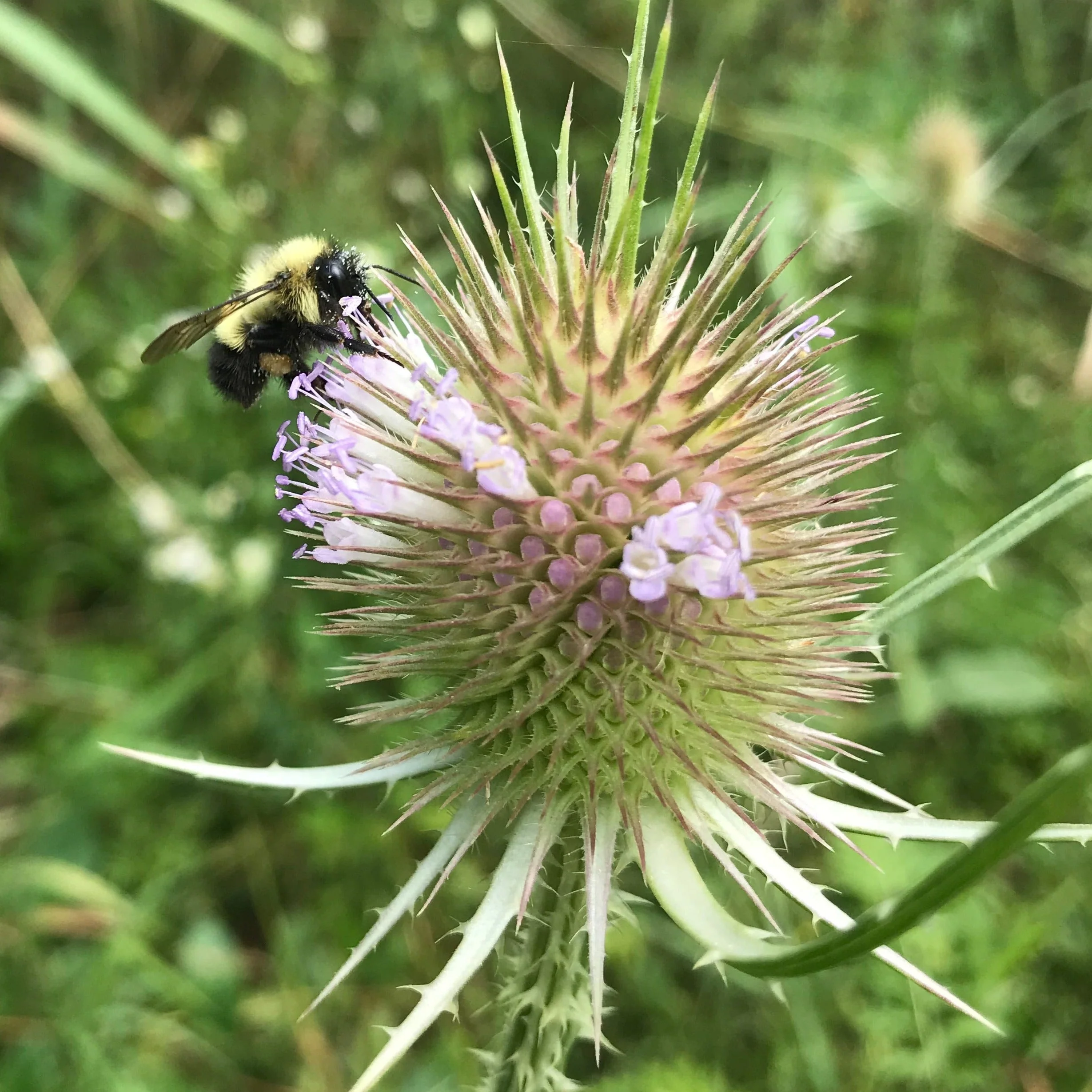
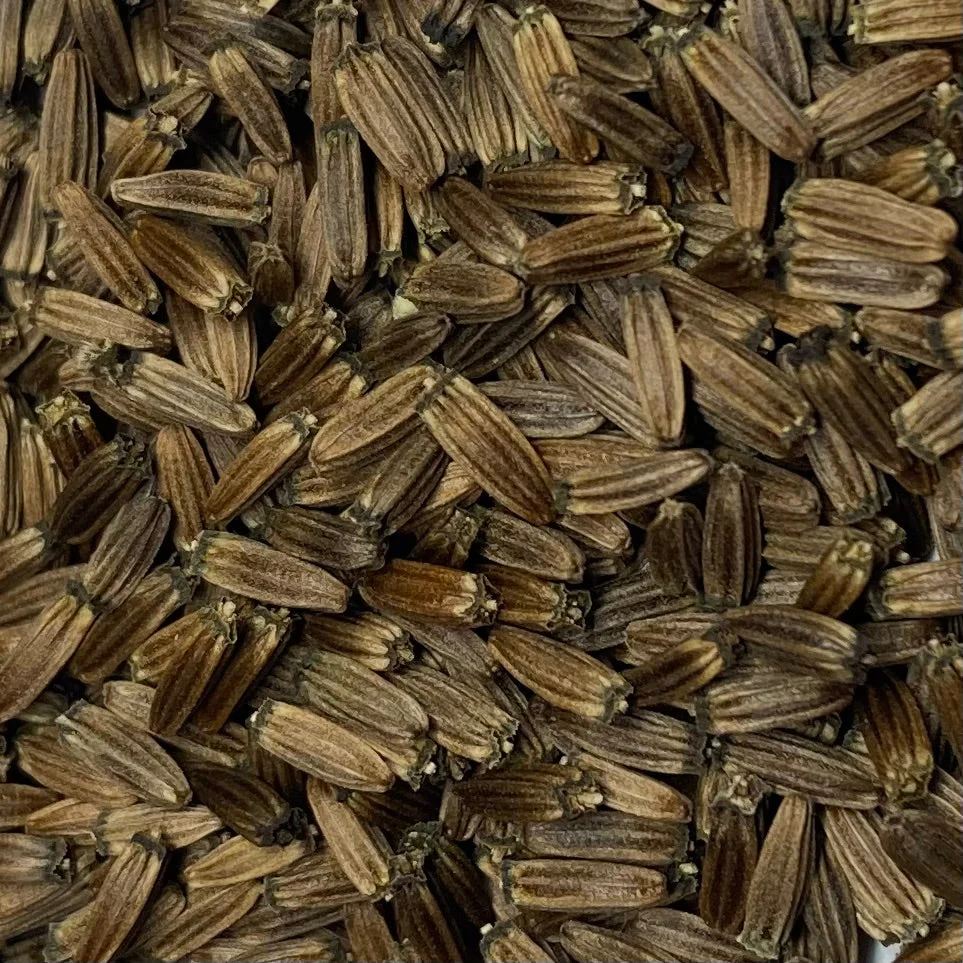
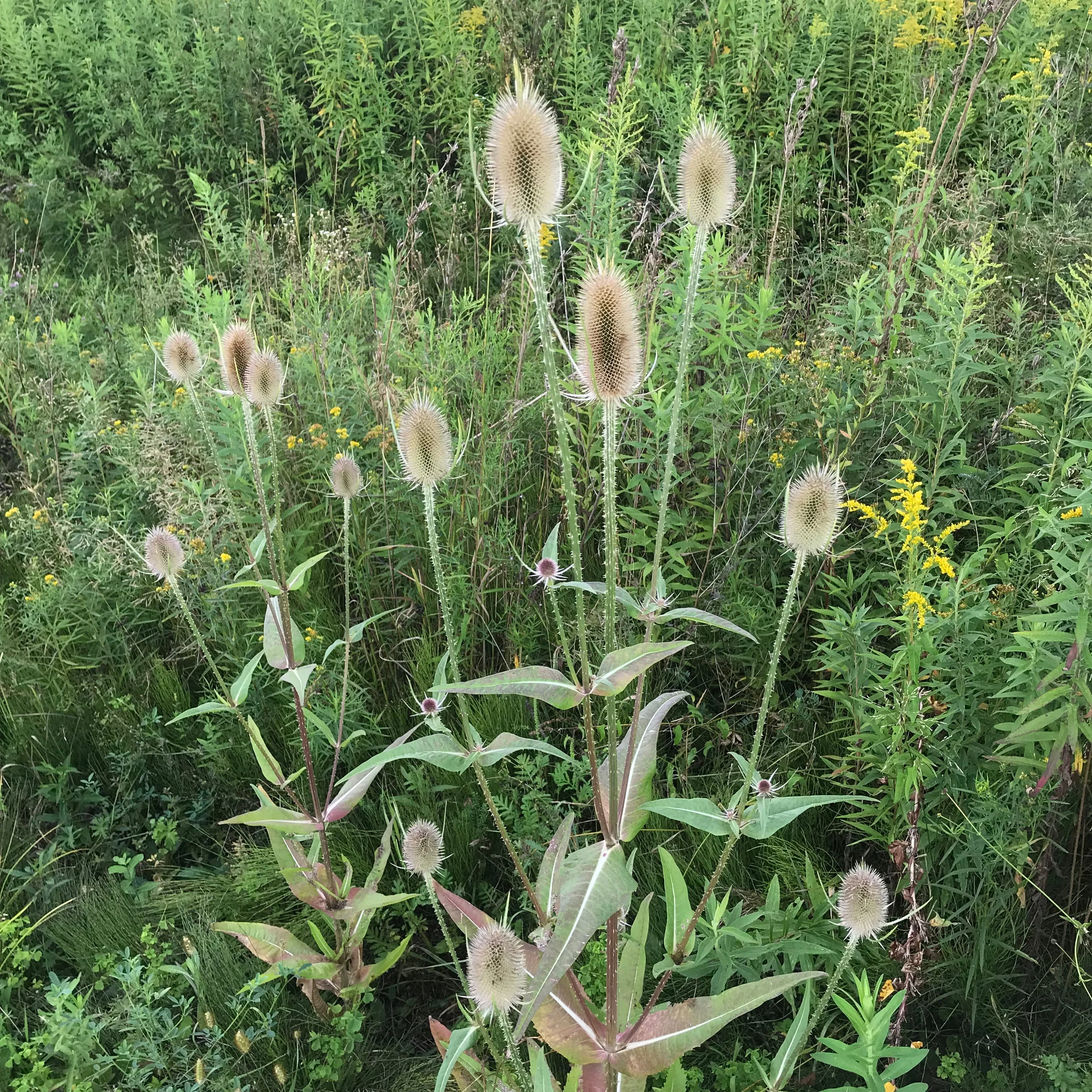
Dipsacus fullonum is a short lived perennial that produces seed once in its life span, storing up energy for at least a year before shooting up a hollow, prickly stem. It then forms an egg-like flower head, surrounded by sharp bracts. Teasel is native to Europe, temperate Asia, and North Africa. It is fond of roadsides, riparian areas, and pastures, easily taking hold in disturbed or degraded soils. This plant spread to North America in the 1700s, where it now has taken hold in certain regions. Be intentional in where these seeds are sown if you are concerned about spread throughout your garden.
The unique flower heads of Dipsacus fullonum make for lovely additions to floral arrangements. Their tufted pale pink heads are sweet as a fresh cut flower, and the dried heads add for a fun touch as well. They also have a history of application in the textile industry, used to raise the nap on woolen cloth. A blue dye obtained from this plant has been utilized as an indigo substitute, and a yellow dye is obtained when the plant is mixed with alum. Teasel has also been used traditionally on warts, skin conditions, ringworm, broken bones and more. Recently teasel has gained popularity as a possible benefit to Lyme and cancer patients although more research is needed on efficacy.
Original: $4.25
-70%$4.25
$1.27More Images
Teasel, Common (Dipsacus fullonum)
*Designated an invasive species in the following states, no sale: CA, CO, IN, KY, MN, MO, NJ, NM, VI, WV, WI
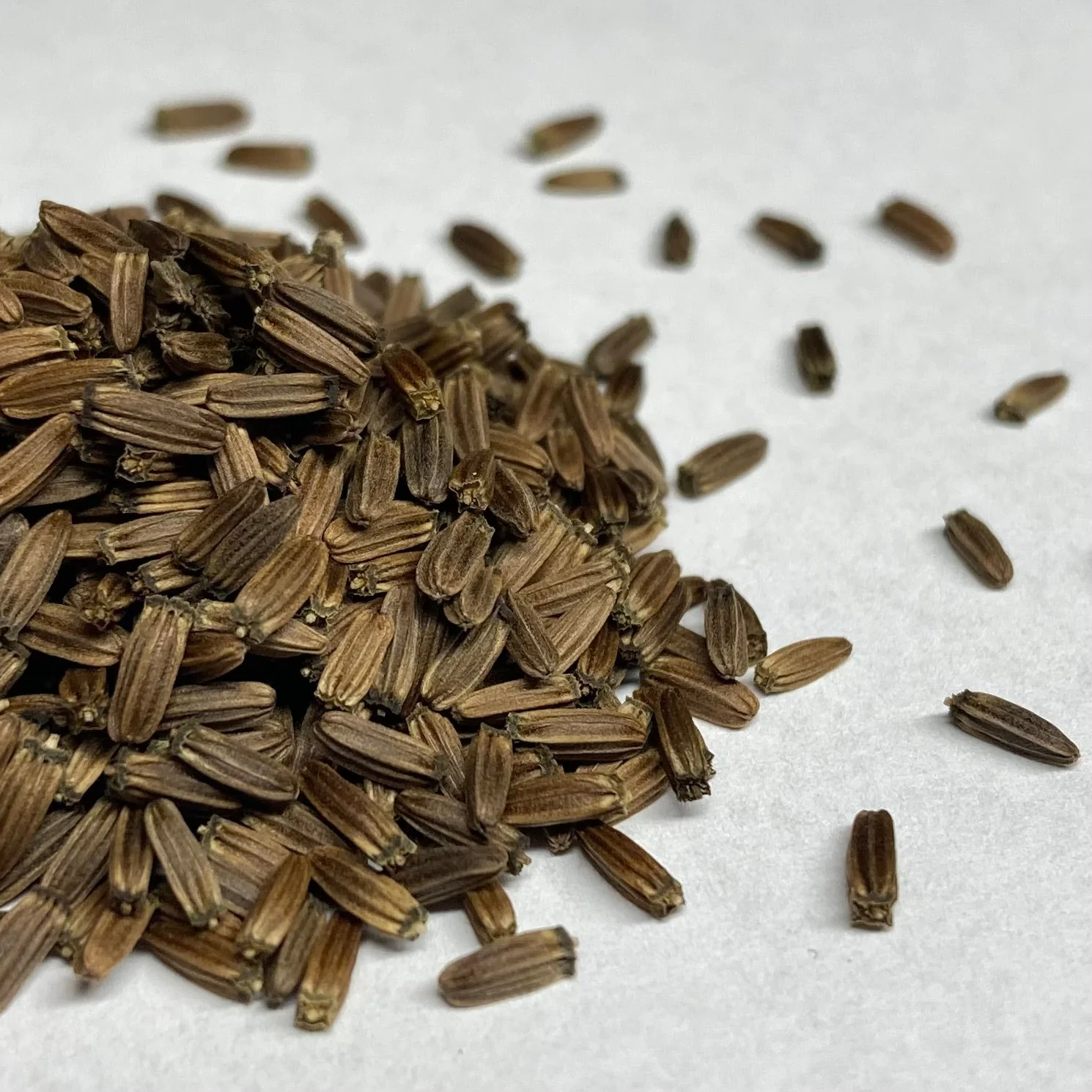
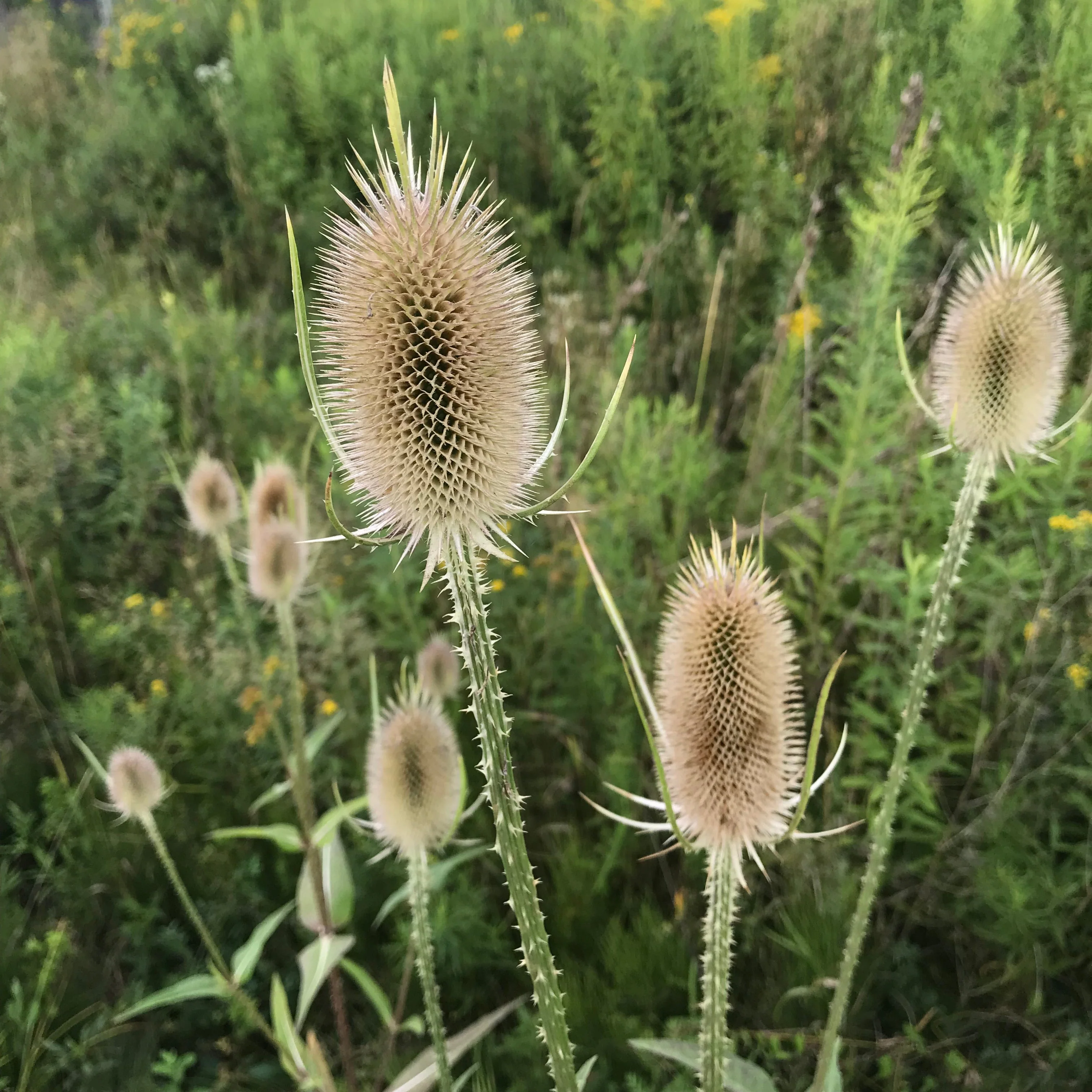
Dipsacus fullonum is a short lived perennial that produces seed once in its life span, storing up energy for at least a year before shooting up a hollow, prickly stem. It then forms an egg-like flower head, surrounded by sharp bracts. Teasel is native to Europe, temperate Asia, and North Africa. It is fond of roadsides, riparian areas, and pastures, easily taking hold in disturbed or degraded soils. This plant spread to North America in the 1700s, where it now has taken hold in certain regions. Be intentional in where these seeds are sown if you are concerned about spread throughout your garden.
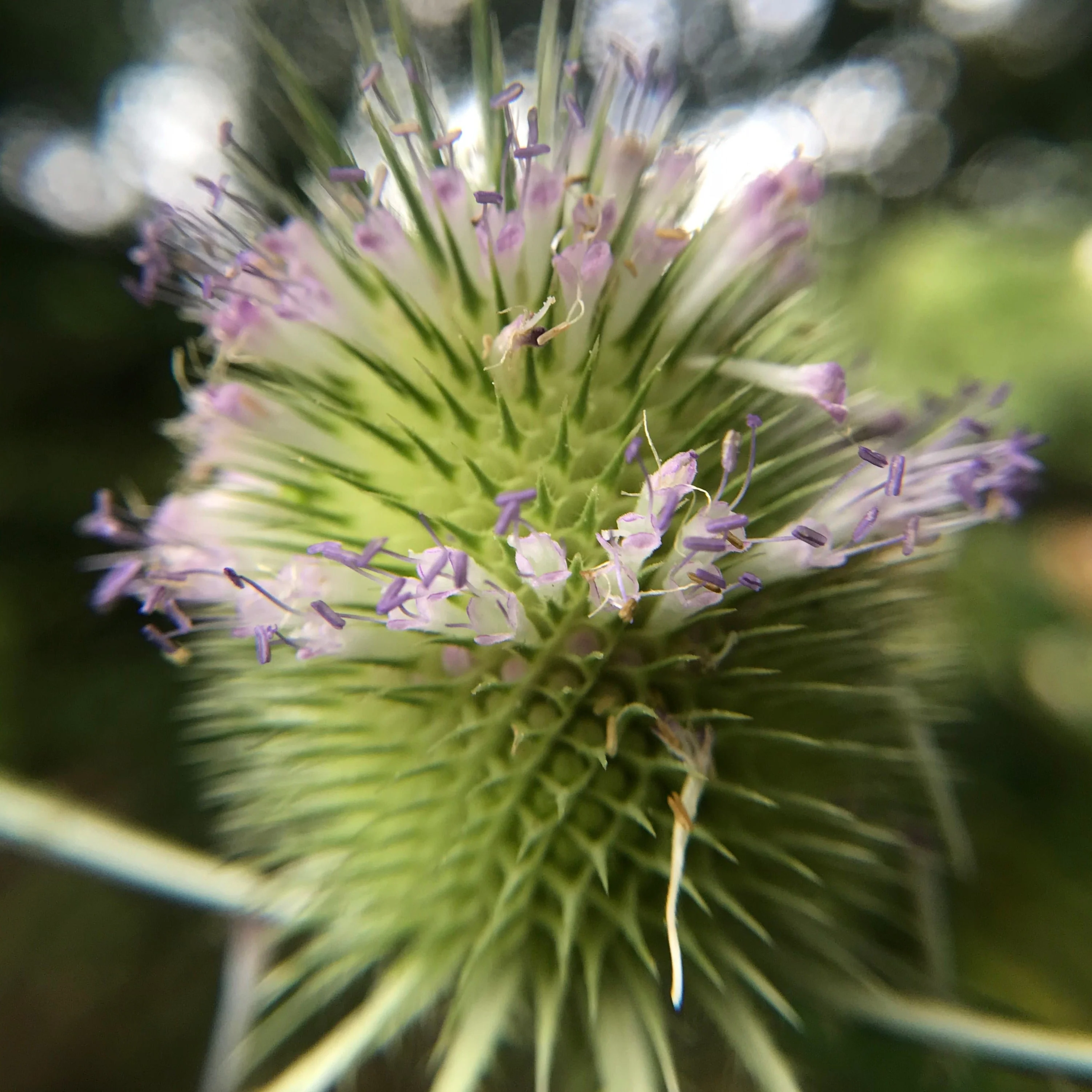
The unique flower heads of Dipsacus fullonum make for lovely additions to floral arrangements. Their tufted pale pink heads are sweet as a fresh cut flower, and the dried heads add for a fun touch as well. They also have a history of application in the textile industry, used to raise the nap on woolen cloth. A blue dye obtained from this plant has been utilized as an indigo substitute, and a yellow dye is obtained when the plant is mixed with alum. Teasel has also been used traditionally on warts, skin conditions, ringworm, broken bones and more. Recently teasel has gained popularity as a possible benefit to Lyme and cancer patients although more research is needed on efficacy.
Product Information
Product Information
Shipping & Returns
Shipping & Returns
Description
*Designated an invasive species in the following states, no sale: CA, CO, IN, KY, MN, MO, NJ, NM, VI, WV, WI
Dipsacus fullonum is a short lived perennial that produces seed once in its life span, storing up energy for at least a year before shooting up a hollow, prickly stem. It then forms an egg-like flower head, surrounded by sharp bracts. Teasel is native to Europe, temperate Asia, and North Africa. It is fond of roadsides, riparian areas, and pastures, easily taking hold in disturbed or degraded soils. This plant spread to North America in the 1700s, where it now has taken hold in certain regions. Be intentional in where these seeds are sown if you are concerned about spread throughout your garden.
The unique flower heads of Dipsacus fullonum make for lovely additions to floral arrangements. Their tufted pale pink heads are sweet as a fresh cut flower, and the dried heads add for a fun touch as well. They also have a history of application in the textile industry, used to raise the nap on woolen cloth. A blue dye obtained from this plant has been utilized as an indigo substitute, and a yellow dye is obtained when the plant is mixed with alum. Teasel has also been used traditionally on warts, skin conditions, ringworm, broken bones and more. Recently teasel has gained popularity as a possible benefit to Lyme and cancer patients although more research is needed on efficacy.